
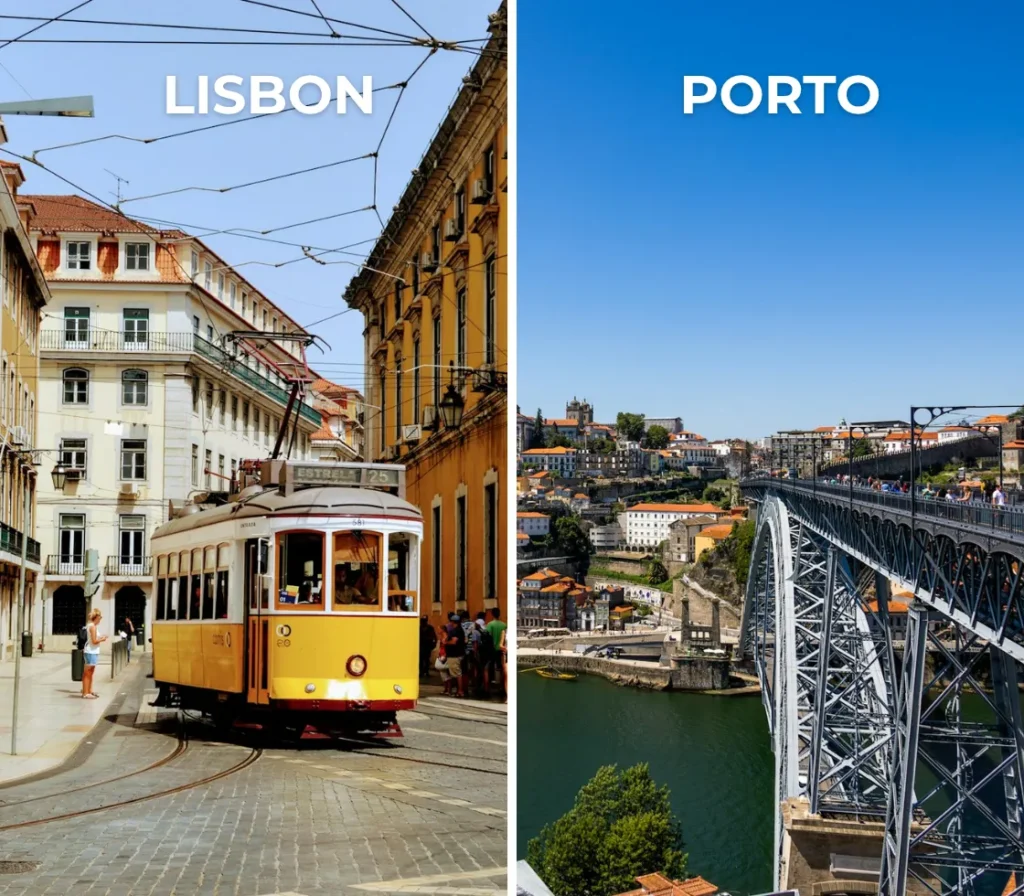
Porto vs Lisbon: which city should you visit first on your trip to Portugal? Both cities offer beautiful architecture, fascinating history, delicious food, and memorable experiences. But each has its own character.
Lisbon is Portugal’s capital, known for its historic neighborhoods, iconic yellow trams, lively atmosphere, and easy access to coastal destinations.
Porto, in northern Portugal, offers picturesque riverfront views, charming streets, traditional cuisine, and a more compact historic center.
So, Porto vs Lisbon: which city should you visit first?
In this guide, we’ll compare the two cities by atmosphere, attractions, weather, transportation, accommodation, and travel costs to help you choose the destination that best suits your interests, budget, and travel style.
Key Takeaways
- Choose Lisbon if you prefer a larger capital city with diverse neighborhoods, cultural attractions, and plenty of day-trip options.
- Choose Porto if you enjoy a compact historic center, scenic river views, and a more intimate atmosphere.
- Weather: Lisbon is generally warmer and drier, while Porto tends to be cooler and wetter, especially in winter.
- Budget: Porto can be more affordable, particularly for accommodation, although prices vary by season.
- Getting around: Both cities have public transport, but expect steep streets and hills in their historic neighborhoods.
- Best option: If your schedule allows, consider visiting both cities rather than choosing just one.
Porto vs Lisbon: The Essential Differences
One of the biggest differences between Porto and Lisbon is how each city feels to explore. Lisbon offers a larger urban landscape with diverse neighborhoods, while Porto has a more compact historic center. Let’s compare their geography, climate, and atmosphere to help you decide which city suits your travel style.
Size and Geography
Lisbon covers approximately 100 square kilometers, while Porto is smaller, at around 41 square kilometers. This difference influences how visitors experience each city.
Lisbon has a wider variety of neighborhoods spread across several hills. Exploring areas such as Alfama, Baixa, Belém, and Parque das Nações often involves using public transportation.
Porto has a more compact historic center, making it convenient to explore many major attractions on foot. However, its steep streets and hills can make walking challenging, especially around Ribeira.
Which is better for you? Choose Lisbon if you enjoy exploring different neighborhoods across a larger city. Porto may suit you better if you prefer shorter distances between historic attractions.
Climate and Weather Patterns
Both Porto and Lisbon have mild climates influenced by the Atlantic Ocean, but their weather conditions differ throughout the year.
Lisbon is generally warmer, sunnier, and drier than Porto. Summers are typically hot and dry, making the city attractive for sightseeing and trips to nearby beaches. Winters are relatively mild, although rainy days are still common.
Porto, located farther north, tends to be cooler and receives more rainfall, particularly during autumn and winter. Summers are usually warm, with cooler evenings and occasional Atlantic breezes.
Which city is better for your trip?
- Spring (March–May): Both cities are good choices, with generally pleasant temperatures and fewer crowds than in summer.
- Summer (June–August): Lisbon is typically hotter, while Porto often offers slightly cooler conditions.
- Autumn (September–November): Early autumn can be pleasant in both cities, but rainfall generally increases sooner in Porto.
- Winter (December–February): Lisbon is usually milder and drier, making it a more comfortable option for outdoor sightseeing.
Travel tip: If you’re planning a winter city break, Lisbon generally offers better chances of mild, dry weather. For a summer visit, Porto may be more comfortable if you prefer slightly cooler temperatures.
Cultural Atmosphere and Local Vibe
Porto and Lisbon both offer rich cultural experiences, but each city has a distinct atmosphere.
Lisbon feels lively and cosmopolitan, with a mix of historic traditions and contemporary culture. Neighborhoods such as Alfama are known for their narrow streets and Fado music, while Chiado and Bairro Alto offer cafés, cultural venues, and nightlife. As Portugal’s capital, Lisbon also has a wide variety of museums, exhibitions, and events.
Porto combines historic charm with a lively local atmosphere. Its Ribeira district is known for colorful buildings, riverside restaurants, and views across the Douro River. The city also has a thriving arts scene, particularly around Rua de Miguel Bombarda, where visitors can explore galleries and independent shops.
Which atmosphere suits you best? Choose Lisbon if you enjoy a larger city with diverse cultural activities and vibrant neighborhoods. Porto may appeal more if you prefer a compact historic center, riverside walks, and a mix of traditional and contemporary culture.
Historical Significance and Architecture
Lisbon and Porto have centuries of history reflected in their architecture, monuments, and historic neighborhoods. While Lisbon’s landmarks reveal its role as Portugal’s capital and a center of maritime exploration, Porto’s historic buildings reflect its commercial heritage and close connection to the Douro River.
From Lisbon’s grand Manueline monuments to Porto’s medieval streets and iconic bridges, both cities offer fascinating opportunities to explore Portugal’s past.
Lisbon’s Imperial Legacy
Lisbon played a central role in Portugal’s maritime expansion during the 15th and 16th centuries. As the country’s capital and an important port, the city became closely connected to overseas exploration, trade, and the growth of the Portuguese Empire.
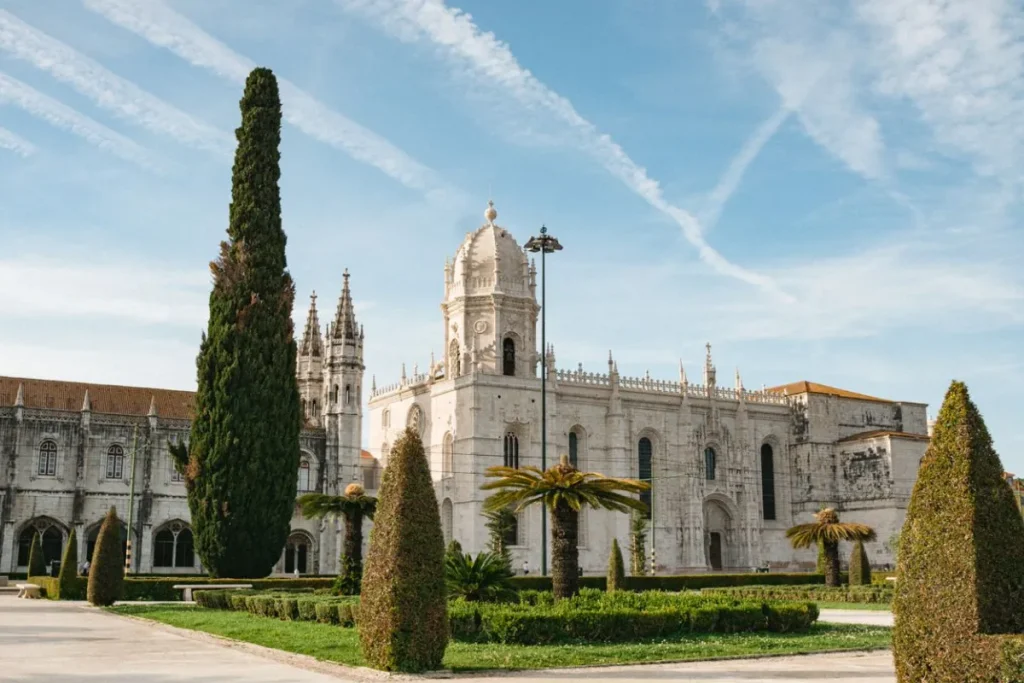
One of the best places to discover this history is Belém, a riverside district known for its remarkable Manueline architecture.
The Jerónimos Monastery (Mosteiro dos Jerónimos), built beginning in the early 16th century, is one of Portugal’s most impressive architectural landmarks. Nearby, the Belém Tower (Torre de Belém) was constructed in the same century as part of the defensive system protecting the entrance to Lisbon’s harbor.
Both monuments are recognized as UNESCO World Heritage Sites and remain important symbols of Portugal’s maritime history.
Beyond Belém, Lisbon’s historic neighborhoods, including Alfama and Baixa, reveal other chapters of the city’s past. Baixa, in particular, reflects the reconstruction that followed the devastating earthquake of 1755.
Porto’s Mercantile Heritage
Porto’s history is closely connected to maritime trade and commerce along the Douro River. For centuries, the city developed as an important trading center, with its historic streets, warehouses, and riverside buildings reflecting this commercial heritage.
The Ribeira district, with its colorful houses and narrow medieval streets, is one of Porto’s most recognizable historic areas. It forms part of the Historic Centre of Porto, which was inscribed on the UNESCO World Heritage List in 1996.
Across the Douro River lies Vila Nova de Gaia, famous for its historic Port wine cellars. The wine trade played an important role in the region’s economy and helped shape the development of both riverbanks.
One of Porto’s most iconic landmarks is the Dom Luís I Bridge, connecting Porto with Vila Nova de Gaia. Its impressive iron structure dates to the 19th century, with the upper deck inaugurated in 1886. Today, the bridge offers spectacular views of the Douro River and the historic waterfront.
Another important landmark is the Palácio da Bolsa (Stock Exchange Palace), a 19th-century building that reflects Porto’s commercial prosperity.
For history and architecture lovers, Porto offers a fascinating combination of medieval streets, grand commercial buildings, and impressive engineering landmarks.

Food and Culinary Experiences
Food is an essential part of experiencing Portugal, and both Lisbon and Porto have distinctive culinary traditions. Lisbon is known for its seafood restaurants, traditional cod dishes, and famous pastries, while Porto offers hearty northern Portuguese cuisine, including its iconic francesinha sandwich.
Let’s explore the local specialties that make each city worth visiting for food lovers.
Lisbon’s Seafood Scene
Lisbon is an excellent destination for seafood lovers, with traditional Portuguese restaurants serving fresh fish, shellfish, and classic cod dishes.
One of the city’s best-known specialties is Bacalhau à Brás, made with shredded salted cod, thinly cut fried potatoes, onions, and eggs, usually garnished with parsley and black olives.
Other popular dishes include amêijoas à Bulhão Pato (clams cooked with garlic, olive oil, and coriander) and sardinhas assadas (grilled sardines), especially popular during Lisbon’s June festivities.
For a traditional dining experience, explore restaurants in neighborhoods such as Alfama, Baixa, and Chiado, where you’ll find a variety of Portuguese dishes and seafood options.
Travel tip: If you visit Lisbon in June, look for grilled sardines served during the Festas de Lisboa celebrations. They’re an important part of the city’s summer food traditions.

Porto’s Hearty Northern Cuisine
Porto is famous for its hearty northern Portuguese cuisine, with traditional dishes that reflect the region’s history and culinary heritage.
One of the city’s most iconic specialties is francesinha, a substantial sandwich typically filled with ham, sausage, and steak, covered with melted cheese and served with a rich, hot sauce often made with beer and tomatoes. It’s commonly accompanied by French fries.
Another traditional dish is tripas à moda do Porto, a slow-cooked stew made with tripe, white beans, various meats, and sausages. This historic specialty is closely associated with Porto’s culinary identity.
For something different, try bacalhau à Gomes de Sá, a traditional codfish dish prepared with potatoes, onions, olive oil, boiled eggs, and olives. The recipe originated in Porto and remains popular throughout Portugal.
Travel tip: If you’re trying francesinha for the first time, consider sharing one, as portions can be quite generous. Many traditional restaurants in Porto serve their own versions of this famous sandwich.
Want to discover more Portuguese dishes? Explore our guide to traditional Portuguese cuisine.

Wine Culture: Port vs. Vinho Verde
Portugal has a rich wine tradition, and both Porto and Lisbon offer excellent opportunities to discover Portuguese wines.
Porto is closely associated with Port wine, a fortified wine produced in the Douro Valley. Visitors can explore historic Port wine cellars across the river in Vila Nova de Gaia, where guided tours and tastings are popular experiences.
Lisbon offers wines from several Portuguese regions, including the nearby Lisboa wine region, known for its diverse red, white, and sparkling wines. Wine bars and restaurants throughout the city provide opportunities to sample local varieties.
What about Vinho Verde? This fresh, often light and crisp wine comes from northwestern Portugal, not Lisbon. It is particularly associated with northern Portuguese wine culture and is widely available in both cities.
Whether you prefer a traditional Port wine tasting in Porto or exploring regional wines in Lisbon, both destinations offer memorable experiences for wine enthusiasts.
| Wine Experience | Lisbon | Porto |
|---|---|---|
| Regional Wine Connection | Lisboa wine region | Douro Valley and Port wine |
| Popular Experience | Wine bars and regional tastings | Port wine cellar tours |
| Wine Styles | Red, white, and sparkling wines | Port wine and Douro wines |
| Nearby Wine Destination | Bucelas | Vila Nova de Gaia |
Which city is better for food and wine lovers? Choose Porto if you want to explore traditional northern cuisine and the history of Port wine. Lisbon is an excellent choice for seafood lovers and travelers interested in discovering wines from different Portuguese regions. Both cities offer a rewarding culinary experience.
Navigating the Cities: Transportation and Accessibility
Portugal’s two main cities, Porto and Lisbon, offer different ways to get around. Each city has its own unique transportation system.
Getting Around Lisbon
Lisbon has an extensive public transport network, making it easy to explore the city without renting a car. The Lisbon Metro has four lines (Blue, Yellow, Green, and Red) connecting major areas, including the airport and city center.
The metro generally operates daily from 6:30 AM to 1:00 AM, including weekends and public holidays. Buses, trams, and funiculars provide additional connections, especially in historic neighborhoods where metro stations are less accessible.
For convenient travel, visitors can use a navegante occasional card loaded with suitable tickets. Contactless bank card payments are also available directly at Lisbon Metro gates.
Travel tip: Lisbon is famous for its steep hills and cobblestone streets. Combine walking with public transport, particularly when exploring Alfama, Bairro Alto, and other historic areas.
Exploring Porto on Foot and by Transit
Porto is a relatively compact city, and many of its historic attractions can be explored on foot. However, steep streets and hills, particularly around Ribeira, can make walking challenging.
The Metro do Porto connects the city center with surrounding areas, including Porto Airport. Buses provide additional connections to neighborhoods and destinations not directly served by the metro.
For a scenic experience, consider Porto’s historic Tram Line 1, which follows part of the Douro River. It is a popular sightseeing attraction rather than the main way to travel around the city.
The Andante card can be used on the metro and participating bus and rail services. Travelers should check which services accept Andante tickets and remember to validate their card before each journey and when changing transport.
Travel tip: Explore Porto’s historic center on foot, but use the metro or buses for longer distances. Allow extra time for the steep streets around Ribeira and the Dom Luís I Bridge.
Which city is easier to explore without a car? Both Lisbon and Porto have convenient public transport networks. Lisbon offers more extensive connections across a larger city, while Porto’s compact historic center makes it particularly appealing for walking. In both destinations, public transport is useful for avoiding steep hills and reaching attractions farther from the center.
Costs and Budget Considerations
Travel costs can vary significantly between Lisbon and Porto, depending on the season, accommodation choices, and travel style. While Porto is often more budget-friendly, both cities offer options for different budgets.
Let’s compare accommodation, dining, and everyday expenses to help you plan your trip.
Accommodation Comparison
Accommodation is often one of the biggest expenses when visiting Portugal. Lisbon generally has higher hotel prices than Porto, although both cities offer a range of hostels, hotels, and holiday apartments.
Prices depend on the location, time of year, and how far in advance you book. Staying outside the busiest tourist areas can sometimes help reduce costs.
| Accommodation Type | Lisbon | Porto |
|---|---|---|
| Hostel dorm bed (1 person) | €20–35 | €15–30 |
| Budget guesthouse / private room (2 people) | €60–100 | €50–100 |
| Mid-range hotel (double room) | €100–180 | €90–160 |
Please note: These are approximate accommodation prices per night in 2026, intended for travel budget planning. Hostel prices are per person, while private rooms and hotel prices are for two guests sharing a room. Actual rates vary by season, location, availability, and booking date. Tourist taxes may apply separately.
Travel tip: Compare prices for your exact dates before booking. Lisbon is often more expensive, but Porto is not always cheaper, especially during busy periods.
Dining and Entertainment Expenses
Dining and entertainment costs in Lisbon and Porto depend on where you eat and which activities you choose. Both cities offer affordable local restaurants, cafés, museums, and cultural attractions.
For planning purposes, here are some approximate prices in 2026:
- Casual restaurant meal: €10–18 per person in Porto and €12–20 in Lisbon.
- Mid-range restaurant: €20–35 per person in Porto and €25–40 in Lisbon.
- Museums and attractions: Allow approximately €5–20 per paid attraction, although some popular landmarks cost more.
Travel tip: Look for a prato do dia (daily special) or a menu do dia (daily menu) at local restaurants. These can offer good value, particularly at lunchtime.
Porto can be slightly more affordable for everyday dining, but prices in both cities vary considerably between tourist areas and local neighborhoods.
Overall Budget Differences
Porto is often a more affordable destination than Lisbon, particularly when it comes to accommodation. However, your total travel budget will depend on your accommodation, dining choices, transport, and sightseeing plans.
Estimated Daily Budget per Person (2026)
| Travel Style | Porto | Lisbon |
|---|---|---|
| Budget travel | €50–85 | €60–100 |
| Mid-range travel | €95–160 | €110–180 |
These are approximate daily budgets per person for 2026, not guaranteed prices.
Budget travel assumes a hostel dorm bed, affordable meals, public transport, and limited paid sightseeing.
Mid-range travel assumes two people sharing a private room or hotel room, restaurant meals, public transport, and regular sightseeing.
The estimates exclude flights, intercity travel, and major shopping expenses. Actual costs depend on the season, availability, and personal preferences.
Which city offers better value? Porto is often more affordable, particularly for accommodation, but both cities offer options for different travel budgets.
Neighborhoods and Where to Stay
Choosing where to stay can make a big difference to your experience in Lisbon or Porto. Both cities have historic neighborhoods, lively central districts, and quieter residential areas.
The best location depends on your travel style, budget, and plans. Consider how close your accommodation is to public transport, major attractions, and restaurants. Also keep in mind that some historic neighborhoods have steep streets, while popular nightlife areas can be noisy in the evening.
Lisbon’s Diverse Districts
Lisbon has a variety of neighborhoods, each offering a different experience for visitors.
Baixa: A convenient choice for first-time visitors, with central squares, shops, restaurants, and easy access to public transport. Its relatively flat streets make exploring on foot easier than in many other historic areas.
Chiado: A central neighborhood known for its historic cafés, theaters, shops, and cultural attractions. It’s a good option for travelers who want to stay close to major sights, although accommodation can be expensive.
Bairro Alto: Known for its lively nightlife, restaurants, and bars. It’s a popular choice for visitors who enjoy evening entertainment, but some streets can be noisy late at night.
Alfama: One of Lisbon’s oldest neighborhoods, famous for its narrow streets, traditional architecture, and Fado music. It’s ideal for visitors seeking historic charm, although steep streets, stairs, and limited vehicle access can make it less convenient with heavy luggage.
Parque das Nações: A modern riverside district with wide walkways, contemporary architecture, and attractions such as the Oceanário de Lisboa. It can be a good choice for families or travelers who prefer a quieter setting away from the historic center.
Where should you stay in Lisbon? For a first visit, Baixa or Chiado are convenient starting points. Choose Alfama for historic atmosphere, Bairro Alto for nightlife, or Parque das Nações for a more modern environment.
Porto’s Charming Quarters
Porto offers several areas worth considering when choosing accommodation, from historic riverside streets to modern neighborhoods and coastal locations.
Baixa (Downtown): One of the most convenient areas for first-time visitors. Porto’s downtown offers restaurants, shops, cafés, and easy access to attractions such as São Bento Station and Avenida dos Aliados. Some streets can be busy or noisy, particularly near nightlife venues.
Ribeira: Porto’s picturesque historic riverside area, famous for its colorful buildings, restaurants, and views of the Douro River. It’s an excellent choice for visitors who want to stay close to the waterfront and major historic attractions. However, steep streets, tourist crowds, and potentially higher accommodation prices are worth considering.
Boavista: A more modern part of Porto, known for Casa da Música, hotels, shopping, and public transport connections. It can be a practical option for travelers who prefer a location outside the busiest historic streets while remaining connected to the city center.
Foz do Douro: A coastal area where the Douro River meets the Atlantic Ocean. It offers seaside promenades, beaches, cafés, and a more relaxed atmosphere. It’s a good choice for visitors who enjoy coastal walks, although reaching Porto’s main historic attractions generally requires more travel time.
Where should you stay in Porto? For a first visit focused on sightseeing, Baixa is a convenient starting point. Choose Ribeira for historic charm and river views, Boavista for a modern urban setting, or Foz do Douro for a quieter coastal experience.
Nightlife and Entertainment
Both Lisbon and Porto offer plenty of ways to enjoy an evening, from traditional music and riverside dining to lively bars and cultural events.
Lisbon has several well-known nightlife districts spread across the city, while Porto combines a lively downtown scene with scenic evenings along the Douro River. The best choice depends on whether you prefer music, nightlife, or a relaxed evening exploring the city.
Lisbon’s Diverse Nightlife Districts
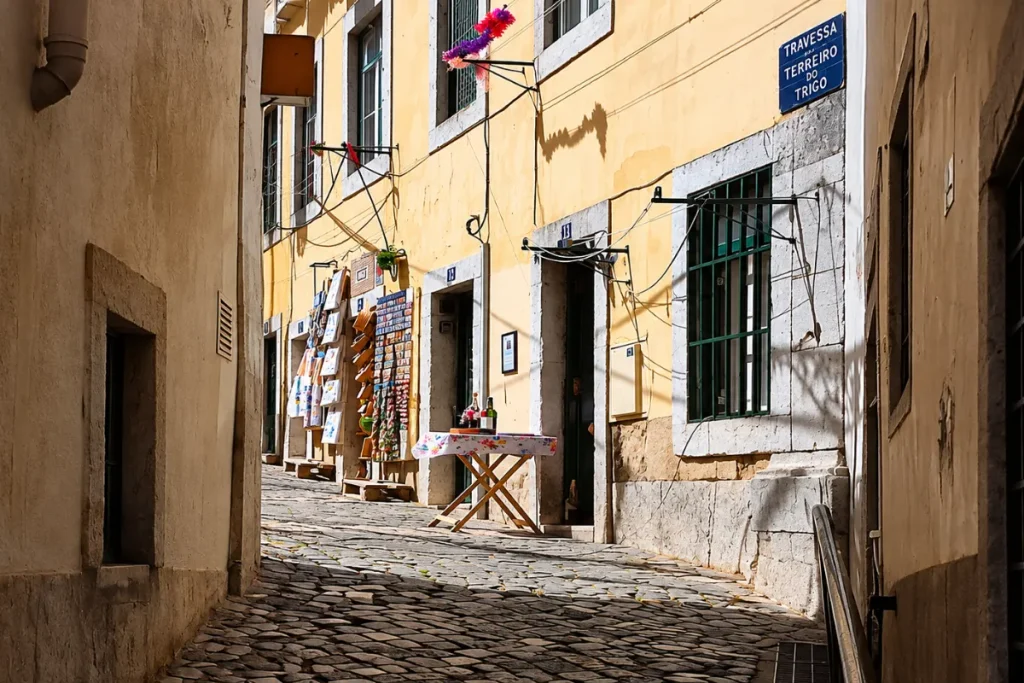
Lisbon offers a lively nightlife scene with something for different tastes. Bairro Alto is known for its bars and bustling evening atmosphere, while Cais do Sodré, especially Pink Street, attracts visitors looking for music and nightlife.
For a more traditional Portuguese experience, Alfama and Mouraria are excellent places to discover live Fado performances.
Porto’s Riverside Evening Scene
Porto offers both relaxed evenings and lively nightlife. Ribeira is ideal for a riverside walk or dinner with views of the Douro River, while the Galerias de Paris area is known for its bars and lively atmosphere.
For a quieter evening, enjoy the sunset from one of Porto’s scenic viewpoints.
Ideal Visitors for Each City
Both Lisbon and Porto appeal to different types of travelers. Your ideal destination depends on your interests, travel style, and what you want to experience during your visit.
Who Would Prefer Lisbon
Lisbon is a great choice for first-time visitors who enjoy a lively capital city, diverse cultural attractions, and a wide range of day trips. It also appeals to families interested in museums and activities such as the Oceanário de Lisboa, as well as travelers who enjoy nightlife and exploring different neighborhoods.
Who Would Prefer Porto
Porto is an excellent choice for travelers who enjoy historic architecture, scenic river views, and traditional Portuguese cuisine. Its compact historic center is particularly appealing to visitors who prefer exploring on foot, taking photographs, and experiencing a city at a more relaxed pace.
Conclusion: Making Your Decision
After exploring the differences between Porto and Lisbon, you’re ready to choose your next destination. Consider your interests, budget, and travel preferences when making your decision.
Both cities have something special to offer. Lisbon appeals to travelers who enjoy history, culture, and a lively atmosphere, while Porto offers beautiful river views, historic charm, and a more compact city center.
Whichever city you choose, you’ll discover a memorable side of Portugal.
Note: This post contains affiliate links. If you click and make a purchase, I may receive a small commission at no extra cost to you. Thank you for supporting this blog!
FAQ
Is Porto or Lisbon more suitable for families with young children?
Both cities are suitable for families with young children. Lisbon offers attractions such as the Oceanário de Lisboa, while Porto has family-friendly parks and riverside areas. In either city, consider the steep streets and public transport connections when choosing accommodation, especially if you’re traveling with a stroller.
Is Porto or Lisbon more budget-friendly?
Porto is generally more budget-friendly than Lisbon, particularly for accommodation. However, prices in both cities vary by season, location, and travel style. Travelers can find affordable options in either destination by booking ahead and comparing prices.
Can I easily get around Porto and Lisbon without a car?
Yes, both cities are easy to explore without a car. Lisbon has an extensive metro, bus, and tram network, while Porto offers metro and bus connections. Many central attractions are within walking distance, although both cities have steep streets and hills.
Is Porto or Lisbon more walkable?
Porto has a more compact historic center, making it convenient to explore many attractions on foot. Lisbon is larger, with sights spread across different neighborhoods. However, both cities have steep hills and cobblestone streets, so comfortable walking shoes are recommended.
Is Porto or Lisbon better for solo travelers?
Both Porto and Lisbon are good choices for solo travelers. Porto’s compact historic center makes sightseeing convenient, while Lisbon offers a wider variety of neighborhoods, cultural activities, and opportunities to meet other travelers. The best choice depends on your interests and travel style.
Can I visit both Porto and Lisbon in one trip?
Yes! Lisbon and Porto are well connected by train and bus, making it easy to include both cities in one trip. The train journey typically takes around 3 hours, depending on the service.
If you have 5–7 days in Portugal, consider spending a few days in each city to explore their main attractions without rushing.
Planning to Visit Lisbon?
Make your trip planning easier with our 7-Day Lisbon Itinerary — a downloadable 2-page A4 PDF with a suggested sightseeing plan and clickable links.
Your discount is applied automatically.