
Introduction
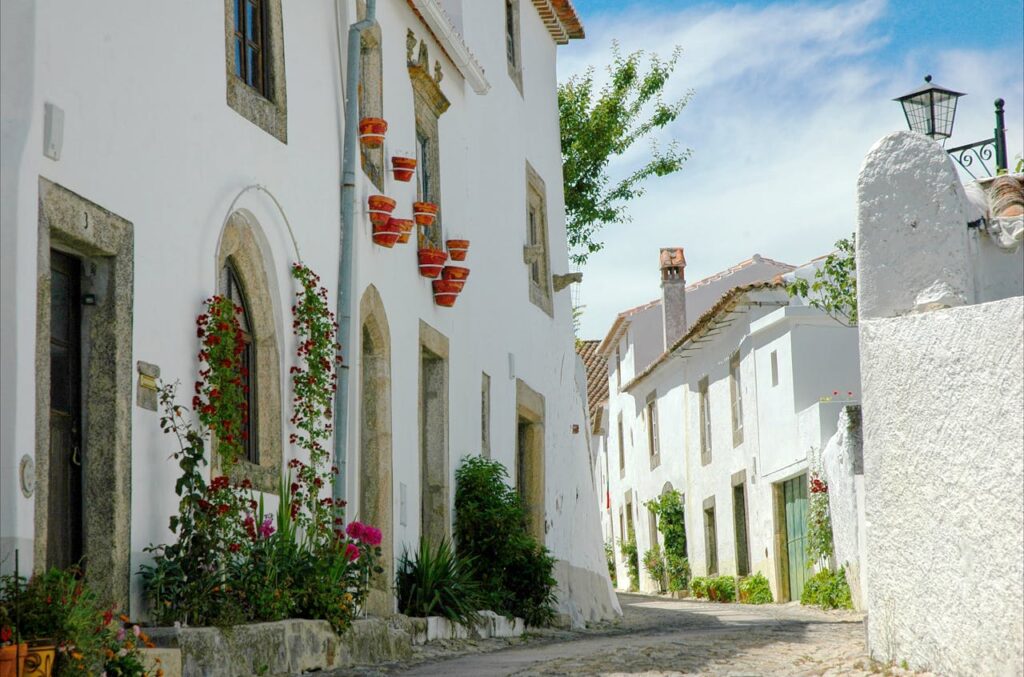
Portugal is a country of diverse landscapes and rich history, but navigating its transport system can initially seem confusing to tourists. Do you need to rent a car to reach the stunning beaches of the Algarve? Should you take the high-speed train or opt for the more budget-friendly intercity bus? And what is the most cost-effective way to use public transport in Lisbon and Porto?
This comprehensive guide will help you understand all the intricacies of traveling around Portugal. We will compare trains, buses, and explain the nuances of car rental and local passes, allowing you to choose the optimal mode of transport for your journey—whether it’s a quick trip between capitals or a detailed exploration of the coast. This is your essential Portugal transportation guide.
🔥 Stop Making Mistakes: Get Your FREE Portuguese Cheat Sheet!
Download the essential phrases, tipping guides, and cultural dos/don'ts to travel like a local.
GET MY INSTANT ACCESS GUIDE!1. Urban Public Transport: Metro, Trams, and Buses
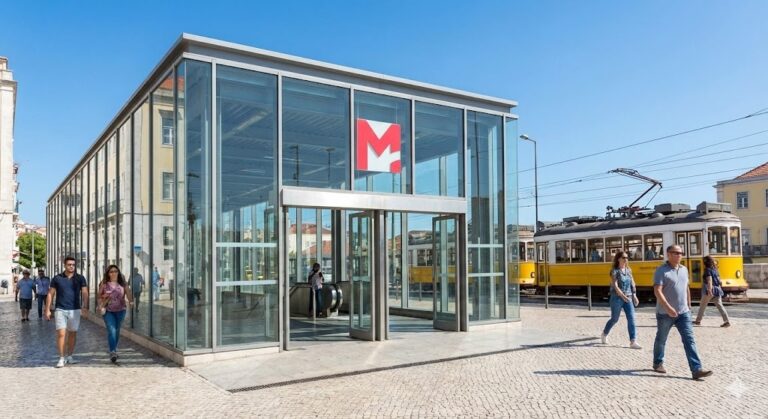
For getting around major cities like Lisbon and Porto, public transport is the fastest, most reliable, and most economical option. The key to saving money lies in special travel cards.
Lisbon and Greater Lisbon (Lisboa)
The capital boasts a well-developed network of metro, trams (including historical routes), and buses.
- Lisbon Metro: This is a modern and efficient system, consisting of four lines (Red, Blue, Yellow, and Green). The main advantage for tourists: the Red Line directly connects the city center with Lisbon Airport (Aeroporto station). This is the fastest and cheapest way to get from the airport to the city center.
- Current Travel Cards: The old Viva Viagem is being replaced by the Navegante card (cost: €0.50). You can load this card with:
- Zapping: Topping up with credit. Fares are deducted at the lowest single-journey rate.
- 24-Hour Pass: Ideal for an intensive day (€6.80). This pass covers the metro, buses, trams, and ferry services in the Greater Lisbon area.
- Funiculars and Elevators: Note that historical elevators and funiculars (such as Elevador de Santa Justa or da Glória) are NOT included in the 24-hour pass and must be paid for separately.
- Suburban Routes (Carris and Electric Trains): The Navegante system also covers bus routes run by Carris (in Greater Lisbon, connecting neighboring cities) and the Suburban Electric Trains (Comboios Urbanos). This is particularly convenient for trips to places like Sintra, Cascais, or Setúbal. This method of Lisbon transport is cheaper, though slower, than intercity trains.
- Historical Routes: Tram 28 is a must-do attraction, but use it for sightseeing, not for rapid transport.
Porto (Porto)
The second-largest city uses an integrated system.
- Andante Card: This is the single, unified card connecting the metro, city buses, and suburban trains. The fare depends on the zoning (zones A, B, C, etc.). Be sure to validate your ticket for the correct zone to avoid fines.
- The Secret to Savings: Always buy and top up the Porto transport Andante card, as buying single-use tickets from the driver or at the station is significantly more expensive.
2. Intercity Travel: Portugal Trains (CP) vs. Buses (Rede Expressos)
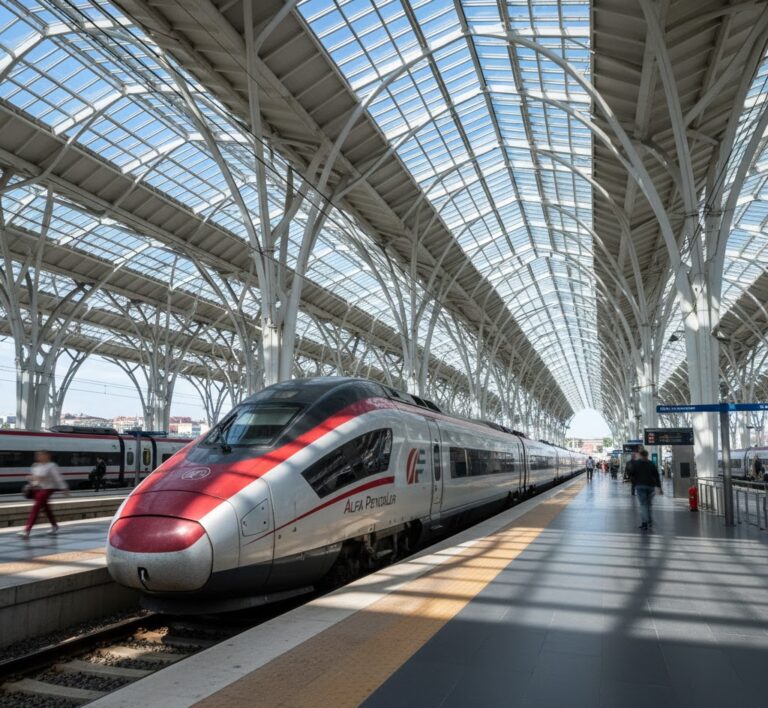
The choice between train and bus for traveling between major cities (Lisbon, Porto, Faro, Coimbra) depends on your priority: speed or budget. This is a key part of traveling around Portugal.
Trains (Comboios de Portugal – CP)
Portugal’s rail network is known for comfort and speed.
- Alfa Pendular (AP): These are high-speed trains connecting Lisbon with Porto (the journey takes about 2.5–3 hours) and Faro. This is the fastest and most comfortable mode of transport, but also the most expensive.
- Intercidades (IC): Intercity trains. They are slower and stop more frequently but are significantly cheaper.
- Special Offer for Tourists (Portugal Rail Pass): If you plan to visit multiple cities (e.g., Lisbon, Porto, Coimbra) and actively use high-speed rail, consider purchasing a special pass. It allows for unlimited travel on IC and AP trains (mandatory seat reservation required) for a chosen period (e.g., 7 or 14 days) and can be very cost-effective.
- Booking Tip: Book tickets via the CP website 30 days in advance for potential discounts up to 50% (known as Promo fares).
Buses (Rede Expressos / FlixBus)
Buses offer a more budget-friendly option and cover more routes, especially to smaller towns where trains do not reach.
- Rede Expressos: The main Portuguese intercity bus operator. They are reliable and comfortable.
- International Operators (FlixBus): Often offer the lowest prices but may depart from less central stations.
- Advantage: If you are traveling around Portugal in non-touristic regions or seeking maximum savings, the bus is your best choice.
3. Car Rental: Freedom or Headache?
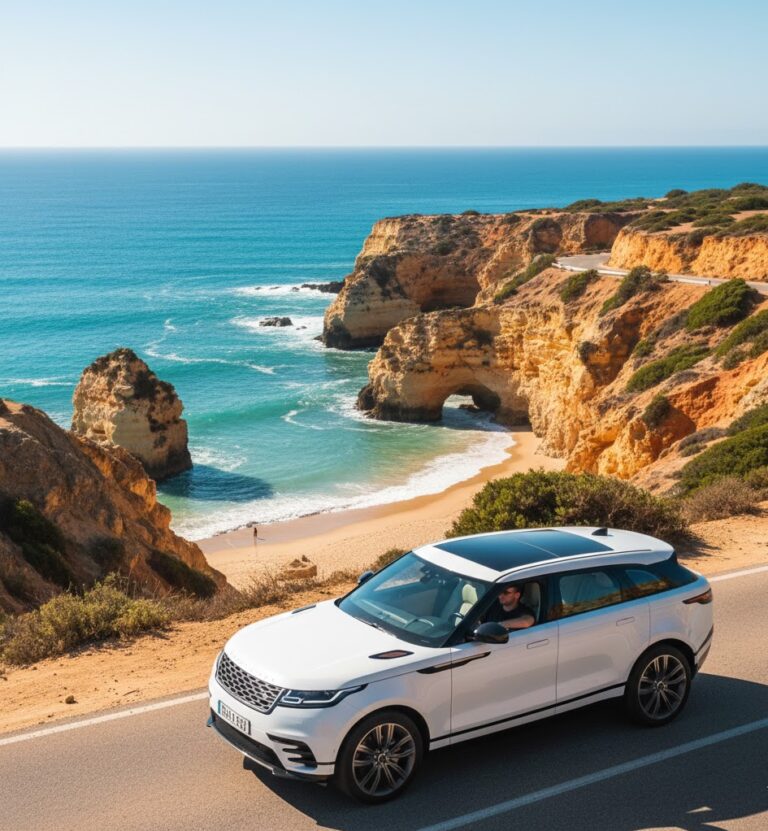
Renting a car offers maximum freedom but comes with certain costs and complications, especially in historical centers.
Advantages of Car Rental
- Exploration: A car is indispensable if you plan to visit remote locations (e.g., hidden beaches of the Algarve, villages in Alentejo, or exploring the Douro Valley).
- Flexibility: Complete freedom in planning your itinerary and stops.
Cons and Warnings
- Parking: In the centers of Lisbon, Porto, and other large cities, parking is VERY expensive or nearly impossible. Factor in parking costs (€15–€25 per day) when budgeting.
- Tolls: Portugal heavily uses electronic tolls on motorways. You MUST rent a Via Verde transponder from the rental company (a small daily fee + the cost of the tolls). Without the Via Verde transponder, paying Portugal toll roads is highly inconvenient for tourists, often requiring manual payment days later at a post office (CTT).
- Narrow Streets: Many historical districts have extremely narrow streets, making driving and maneuvering stressful.
4. Convenient Transfers and Taxis: Uber, Bolt, and Airports

For quick door-to-door transfers or airport trips, modern ride-hailing services are often the best choice.
- Apps: Uber and Bolt are widely available and popular in major cities (Lisbon, Porto, Faro) and tourist areas. They are generally more reliable and offer lower fixed prices than traditional taxis, especially during peak hours.
- Traditional Taxis: Always available, but ensure the driver is using the meter and that surcharges for luggage or night rates are correctly applied.
- Airport Transfers: For large groups or families with a lot of luggage, private transfers (shuttles) can be the most convenient option, delivering you directly to your hotel.
Conclusion: Your Ideal Route
Choosing Portugal transportation options depends entirely on your itinerary and budget.
- For Cities (Lisbon/Porto): Use the metro and buses with the Navegante or Andante cards.
- For Intercity Travel: Alfa Pendular trains for maximum speed, or Rede Expressos buses for maximum savings.
- For Countryside Exploration: Car rental, but only if you are prepared for the Portugal toll roads via Via Verde and parking difficulties.
Plan your trip in advance, and transport will be an easy and enjoyable part of your Portuguese adventure!
🔥 Stop Making Mistakes: Get Your FREE Portuguese Cheat Sheet!
Download the essential phrases, tipping guides, and cultural dos/don'ts to travel like a local.
GET MY INSTANT ACCESS GUIDE!Note: This post contains affiliate links. If you click and make a purchase, I may receive a small commission at no extra cost to you. Thank you for supporting this blog!