
Introduction: The Art of Slow Travel
Most travelers begin and end their Portuguese adventure in vibrant Lisbon or bustling Porto. But if you want to feel the true soul of this country—that very “saudade” (nostalgic longing) and genuine hospitality—you need to turn off the main highways.
Portugal enchants not with skyscrapers, but with the silence of cobbled streets, where the only sound might be a church bell or a leisurely conversation of locals by a fountain. The concept of “Slow Travel” seems to have been invented specifically for the Portuguese countryside. Here, time flows differently. Here, lunch lasts three hours, and the sunset over an olive grove is considered the main event of the day.
In this guide, we will journey through the most photogenic and tranquil towns and villages—from the rugged granite peaks of the North to the whitewashed fortresses of Alentejo and the Moorish mysteries of the Algarve.
1. Northern Portugal: The Cradle of Tradition and Green Mountains
Northern Portugal is a land of “Vinho Verde” (green wine), granite mountains, and deep-rooted traditions. Here, traditions aren’t just honored—they are lived.
Ponte de Lima: The Oldest Village in the Country
Ponte de Lima is often called the oldest “vila” in Portugal (founded in 1125). The main pride of this place is the majestic medieval bridge crossing the Lima River.
- The Legend: Ancient Romans believed the Lima was the River of Oblivion (Lethe). They thought anyone who crossed it would lose their memory forever. Today, the only thing you might forget here is your work deadlines.
- What to do: Stroll along the flowery riverbank (the town is famous for its garden festivals) and be sure to try the local Sarrabulho dish paired with a glass of ice-cold white wine.
Guimarães: Where the Nation Was Born
While Guimarães is officially a city, its historical center feels like a labyrinth of cozy squares and medieval houses with wooden balconies. The rugged 10th-century castle looms over the town. A famous inscription on the city wall reads: “Aqui nasceu Portugal” (Portugal was born here).
- The Atmosphere: In the evening, when the lanterns are lit, the Largo da Oliveira square turns into a set for a movie about knights. It’s the perfect spot for those who love history but want to avoid the capital’s hustle.
Amarante: Romance by the Tâmega River
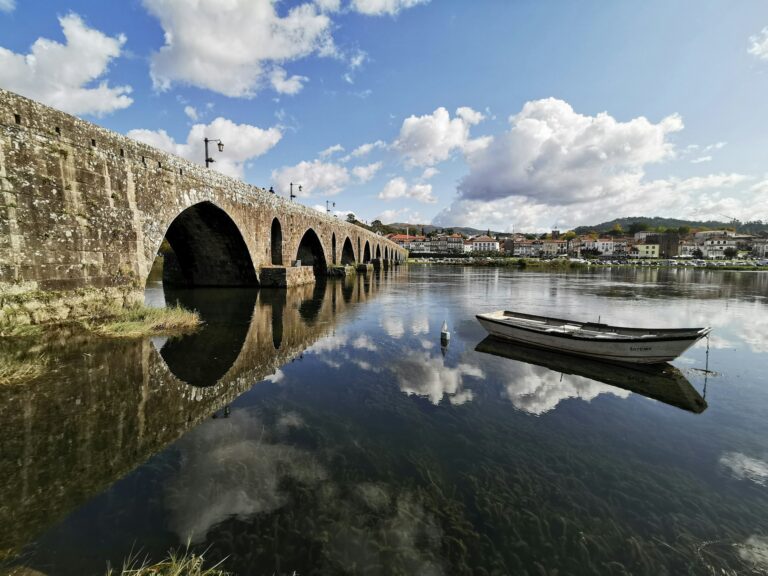
Amarante is a city of poets and lovers, nestled comfortably along the banks of the Tâmega River. Its main symbol is the bridge and the Monastery of São Gonçalo.
- Fun Fact: Saint Gonçalo is considered the patron saint of marriage and fertility. In his honor, the town bakes very specific (phallic) cakes that young men give to girls. It’s a cheerful and kind tradition, free from vulgarity.
- For relaxation: Rent a pedal boat and leisurely float under the old bridge, watching the willow trees reflect in the water.
🔥 Stop Making Mistakes: Get Your FREE Portuguese Cheat Sheet!
Download the essential phrases, tipping guides, and cultural dos/don'ts to travel like a local.
GET MY INSTANT ACCESS GUIDE!2. Central Portugal: The Magic of Stone and History
The center of the country is a land of contrasts: from the rugged peaks of Serra da Estrela to the Atlantic coast.
Monsanto: The Village Among the Boulders
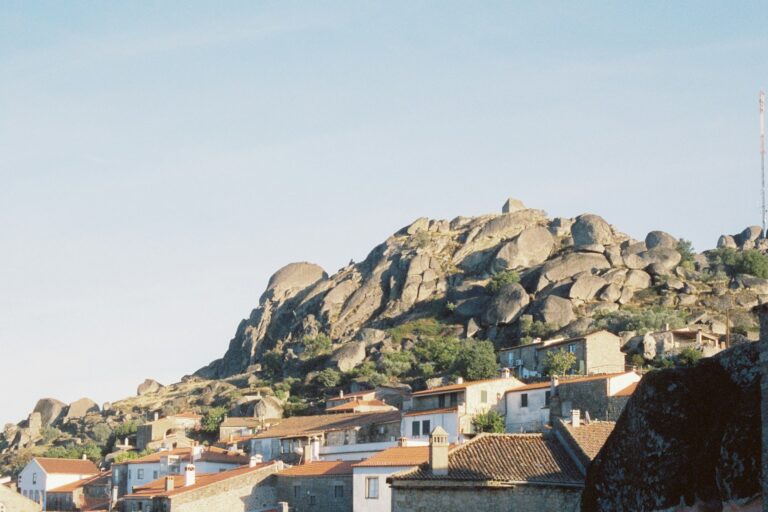
Monsanto is officially recognized as the “most Portuguese village in Portugal.” This place looks surreal: houses are built directly between giant granite boulders, which sometimes serve as a roof or a wall.
- Game of Thrones: If these landscapes look familiar, it’s because Monsanto served as the filming location for Dragonstone in the series “House of the Dragon.”
- Pro Tip: Hike up to the castle ruins at the top of the hill at sunset. The panoramic view of the plains below is breathtaking.
Piódão: A Nativity Scene in the Mountains
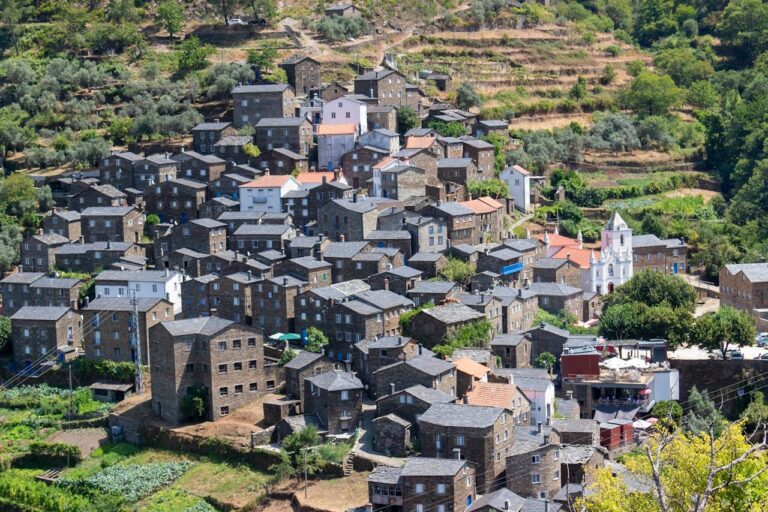
Piódão is one of the “schist villages” (Aldeias do Xisto). Hidden deep in the mountains, its houses are built from dark schist with bright blue doors and window frames.
- Atmosphere: Because the village is perched on a slope, it resembles a fairy-tale Nativity scene at night when the lights come on. With no car noise, only the sounds of nature, it’s the ultimate place for a “digital detox.”
Óbidos: A Gift for a Queen
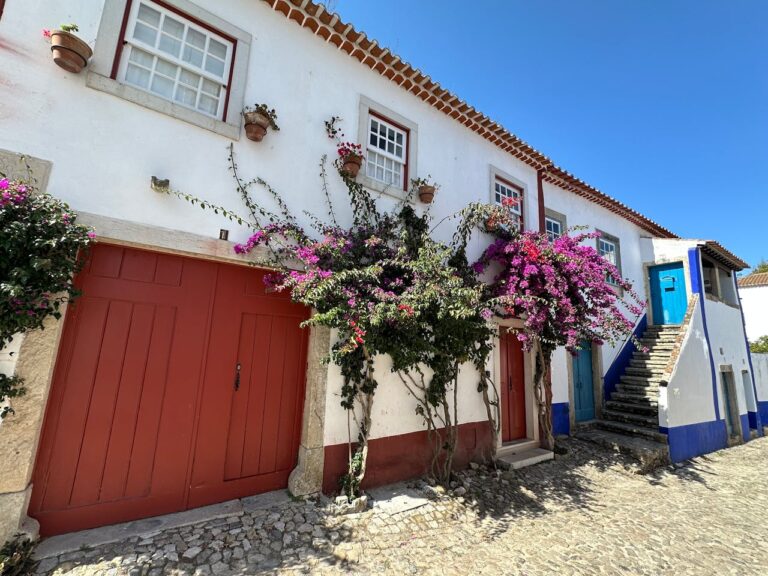
Óbidos is a classic walled town. In ancient times, Portuguese kings would give this town to their queens as a wedding gift. It is surrounded by high walls that you can walk along for a full perimeter view.
- How to avoid crowds: Óbidos is very popular. The secret is to stay overnight. Once the tour buses leave, the town becomes yours. Sip a traditional Ginjinha (cherry liqueur) from a chocolate cup in a quiet bar on a side street.
3. Alentejo: Golden Fields and Endless Peace
Alentejo is the heart of Portugal. This is a land of olive groves, cork oaks, and dazzlingly white villages on hilltops. If you are looking for a place to hear your own thoughts, this is it.
Monsaraz: A Gaze at the Stars and a Freshwater Sea
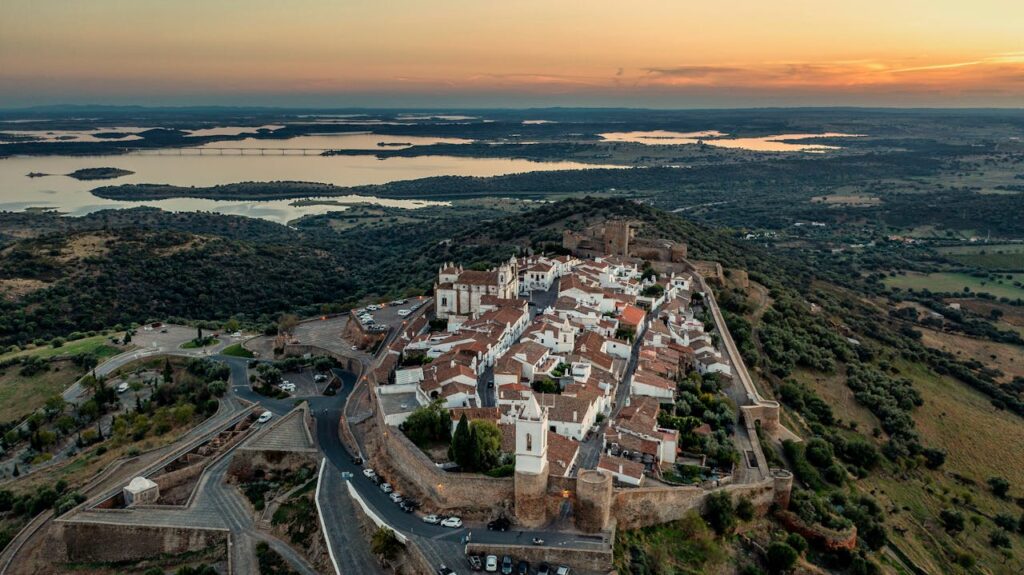
Monsaraz is a tiny medieval village entirely enclosed within fortress walls. It overlooks the vast Alqueva reservoir, which looks like a real sea amidst the fields.
- Atmosphere: With only a few streets paved with rough stone and houses whitewashed to perfection, time seems to have stopped here in the 14th century.
Stargazing: This area is part of the Dark Sky Alqueva Reserve. Due to the lack of light pollution, the Milky Way is visible to the naked eye. It’s a dream location for romantics.
Marvão: The Eagle’s Nest on the Border
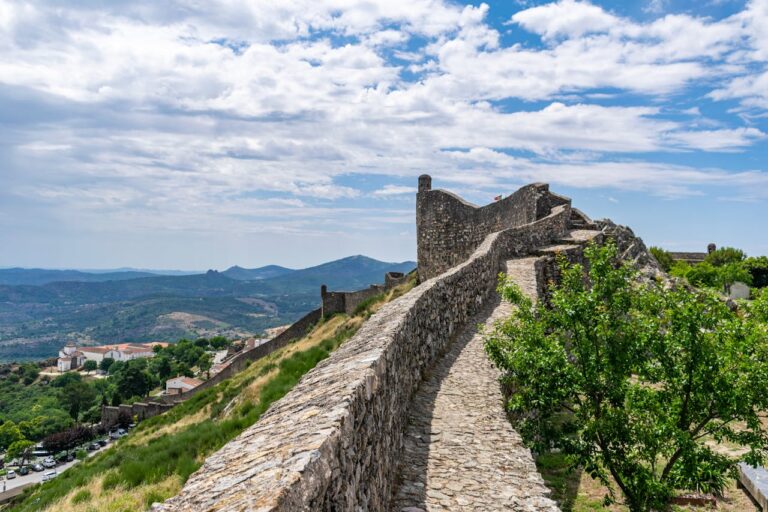
Marvão sits nearly 900 meters above sea level on the very edge of a sheer cliff. They say you can see the backs of birds flying below from its walls.
- What to see: Marvão Castle is one of the most impregnable in history. Walk through its manicured gardens that seem to float in the clouds. The panorama stretches for miles, even into Spanish territory.
Vila Viçosa: The Marble Fairytale
This town is unique because it is almost entirely built from local marble. Even doorframes and ordinary benches are made of this noble stone.
Palatial Splendor: Don’t miss the Paço Ducal—the magnificent palace of the Dukes of Braganza. Its 110-meter-long facade, entirely covered in marble, is incredibly monumental for such a quiet town.
4. The Algarve: Comfort Away from Beach Crowds
Many associate the Algarve only with large hotels and noisy beaches. But just 20 kilometers inland or to the east, you’ll find a completely different reality.
Tavira: The City of 37 Churches
Tavira is often called the most beautiful town in the Algarve. There are no high-rise buildings here, only traditional architecture with “tesoura” (scissor-shaped) roofs and ornate doors.
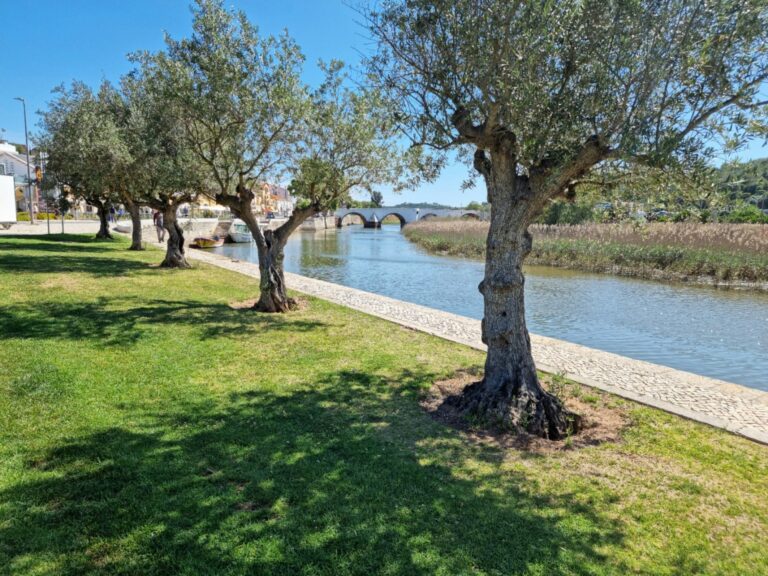
- Route: Start your walk at the “Roman Bridge,” pass through the castle gardens, and end your evening at a restaurant along the Gilão River.
- Beach Secret: To get to the beach, you need to take a small ferry to Tavira Island—a long strip of golden sand with crystal-clear water where you can find solitude even in high season.
Silves: The Red Castle of the Moors
Once the capital of the Moorish Kingdom of the Algarve, Silves rivaled Lisbon in beauty. Today, it’s a quiet town dominated by a castle built from dark red sandstone.
- The Experience: A walk through Silves is a journey into Portugal’s Arabic past. Narrow steep streets, the scent of orange trees, and storks nesting on every chimney create a unique atmosphere.
Aljezur: Wild Coast for Free Spirits
If you love wild nature, rugged cliffs, and the power of the ocean, head to Aljezur on the west coast (Costa Vicentina).
- Who it’s for: This is for those who prefer the sound of the surf over nightclubs. The old town with its castle ruins overlooks a valley, and a ten-minute drive takes you to some of the most beautiful and “empty” beaches in Europe, like Arrifana.
5. Practical Tips for a Perfect Relaxing Getaway
To make your trip to the “hinterland” comfortable, keep a few nuances in mind:
- Best time to visit: Ideally, May-June or September-October. It’s warm but not sweltering like the peak of summer in Alentejo. In winter, mountain villages can be chilly, but it’s the perfect time for fireplaces and red wine.
- Transportation: Buses are rare in these areas, and trains almost non-existent. Car rental is not a luxury but the only way to see the best spots. (Check my previous post on transportation for tips!).
- Where to stay: Look for accommodation in the Turismo Rural category. These can be restored farmhouses (Quintas) or ancient estates. It’s an opportunity to live the local life with homemade cheese for breakfast and “touchable” silence.
Conclusion: The Portugal You Deserve
The small towns and villages of Portugal are not just points on a map; they are places that teach us the most important thing: how to enjoy the moment. You don’t need to rush through a list of sights here. Just being is enough.
Try leaving the noisy cities for a few days and head to where it smells like eucalyptus and old stone. You’ll be surprised how quickly your soul recharges in these “cozy corners.”
🛍️ Plan Your Perfect Family Escape to Portugal
If you’re dreaming of exploring these fairytale villages with your family but feel overwhelmed by the logistics, I have the perfect solution for you!
My Family Vacation Planner is now available in the shop. It’s a comprehensive tool designed to help you:
- Organize all the details of your road trip through Portugal’s hidden gems in one place.
- Plan your budget for transport, cozy guesthouses (Quintas), and local activities.
- Ensure nothing is left behind with ready-to-use packing lists for the whole family.
- Transform your Portuguese getaway from a logistical puzzle into a structured, stress-free adventure.